PhD positions open in our team!
Shape the Future of Space Sustainability with the COMPASS Lab! Are you passionate about making space safer and more sustainable?The COMPASS […]

Shape the Future of Space Sustainability with the COMPASS Lab! Are you passionate about making space safer and more sustainable?The COMPASS […]
Interested in contributing to the future of Space Autonomous Rendezvous? One PhD position open on “Guidance navigation and control for a technology demonstration in low Earth orbit”
Interested in contributing to the future of Space Autonomous Rendezvous? One PhD position open on “Efficient and Robust Guidance Navigation and Control Algorithms for a Rendezvous Technology Demonstration in Low Earth Orbit”.
Interested in contributing to the future of Space Traffic Management? Two Postdoc positions open on “Techniques and software development for Space Situational Awareness and Space Traffic management”.
Ph.D. student Andrea presented our work on space sustainability at the 9th Space Traffic Management Conference in Austin, Texas.
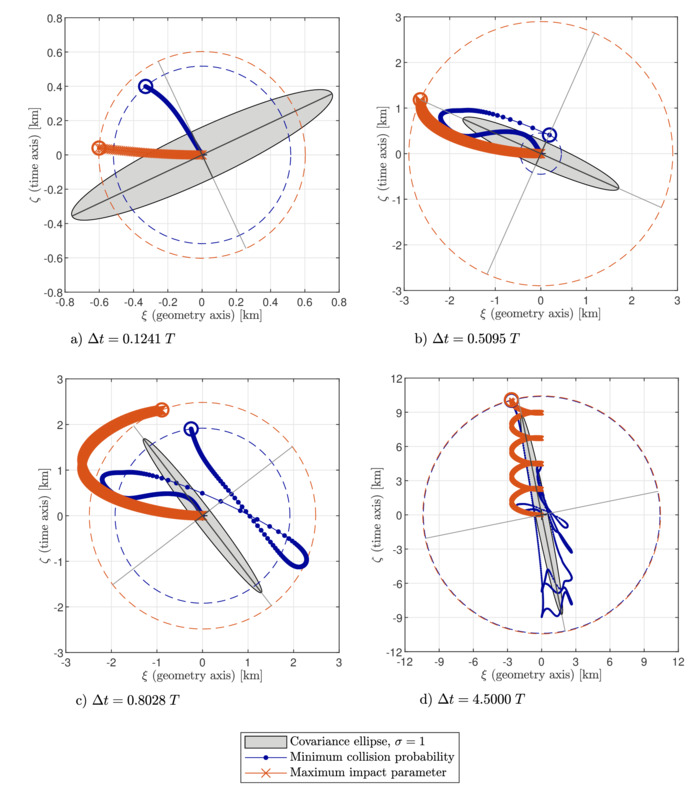
Satellite operators need increasingly powerful tools for collision avoidance manoeuvre (CAM) design, to deal with the growing number of objects in space. A recent open access publication by Juan Luis Gonzalo, Camilla Colombo, and Pierluigi Di Lizia proposes an analytical formulation for CAMs allowing to maximize deviation or minimize collision probability. Check it out!
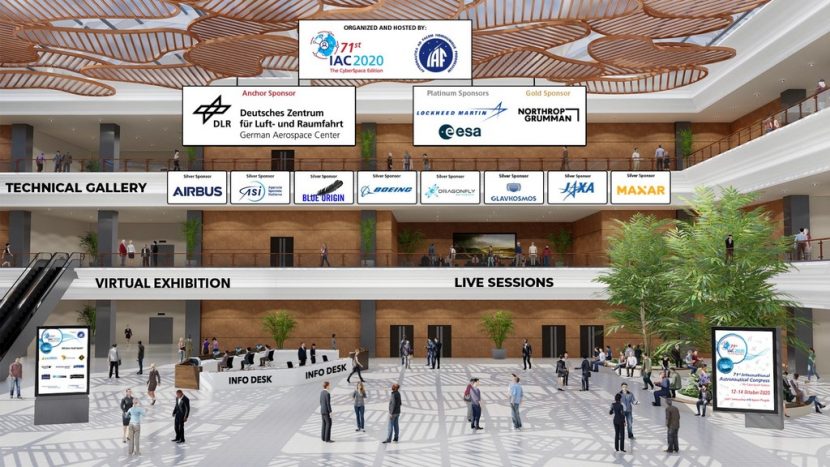
In-person meetings have become a rare luxury due to the COVID-19 pandemic. That is why the International Astronautical Federation has made the 71st International Astronautical Congress – The CyberSpace Edition their first fully online congress. On 12-14 October more than 10,000 attendees joined all over the world to share the latest space developments. The COMPASS team contributed with 5 papers and videolectures.
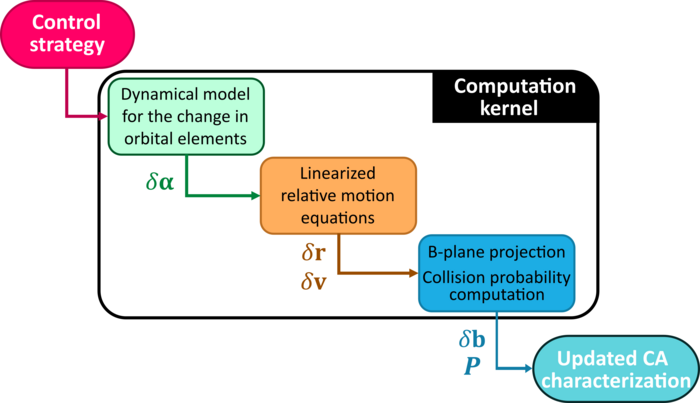
MISS, a new software tool for the analysis and design of collision avoidance manoeuvres in space, is presented in a paper published by Juan Luis Gonzalo, Camilla Colombo, and Pierluigi Di Lizia in the Journal of Space Safety Engineering.